Upgrade from Navision to Dynamics 365

Still running an older Navision solution and considering your next step? At CURABIS, we upgrade you safely to Dynamics 365 Business Central with a proven programme that combines full data migration with targeted Quote-to-Cash (Q2C) and Procure-to-Pay (P2P) workshops. That way, you keep what works—and get the full value from the modern platform.

Workshop Business Central

It's about more than swapping systems

The choice is really less about technology and more about your strategic direction.

Moving to Business Central is often seen as a technical project. In practice, it's a business decision that needs a clear picture, direction and the right choices along the way. It always starts with clarity: understanding your current system, your processes and where the real complexity sits. Then decisions get made on solid ground. Then comes choosing the right path forward. For some, the most value comes from building on what you have through a structured upgrade. For others, it makes sense to simplify and rethink the starting point. But the real work begins once you're in the cloud. This is where businesses genuinely start to digitise their workflows, automate manual processes and simplify day-to-day operations. Tasks that used to take time and coordination become a natural part of how the system flows. The system stays continuously updated, improved and adjusted, so it keeps up with your business and with the times. New requirements can be handled as they come up, without big projects every time.

Two paths, one goal

When businesses move from NAV to Business Central, they usually face the choice between two different routes to the same destination.

Build on what works

For businesses with a long-standing NAV setup, there are often strong reasons to build on what already works.

It gives you a solid, cost-effective starting point and lets you get to results faster.

Many companies have built systems over the years that support core business processes.

When that foundation is solid, it makes sense to carry it forward and open up new possibilities in Business Central at the same time.

This isn't about keeping everything as it is.

It's about carrying forward what really works, and making room for digitisation and automation on top.

Rethink and simplify

Here you work closer to standard Business Central functionality, with a focus on simplifying workflows and cutting complexity.

It can give you a leaner setup, but it also requires that the organisation is ready to work in new ways.

When you change processes, you also change how the business works day to day.

That calls for change management, real involvement and clear direction, so the system doesn't just go live but actually sticks.

It's about making sure your people understand and take ownership of the new ways of working.

That's where the value of a more standardised, simpler system actually shows up.

Two paths to Business Central.

The right choice depends on your situation and which trade-offs you're willing to make.

Doing it right, including the technical side

At CURABIS, we work with both approaches, and we particularly know our way around the harder technical route.

This is where the real complexity shows up.

Historical customisations, integrations and business-critical processes don't just need moving. They need to be understood, assessed and carried forward safely.

That takes experience. Not just with Business Central, but with the many versions of NAV behind it.

• You keep what works day to day

• You avoid unnecessary change fatigue

• You end up with a system ready for what's next

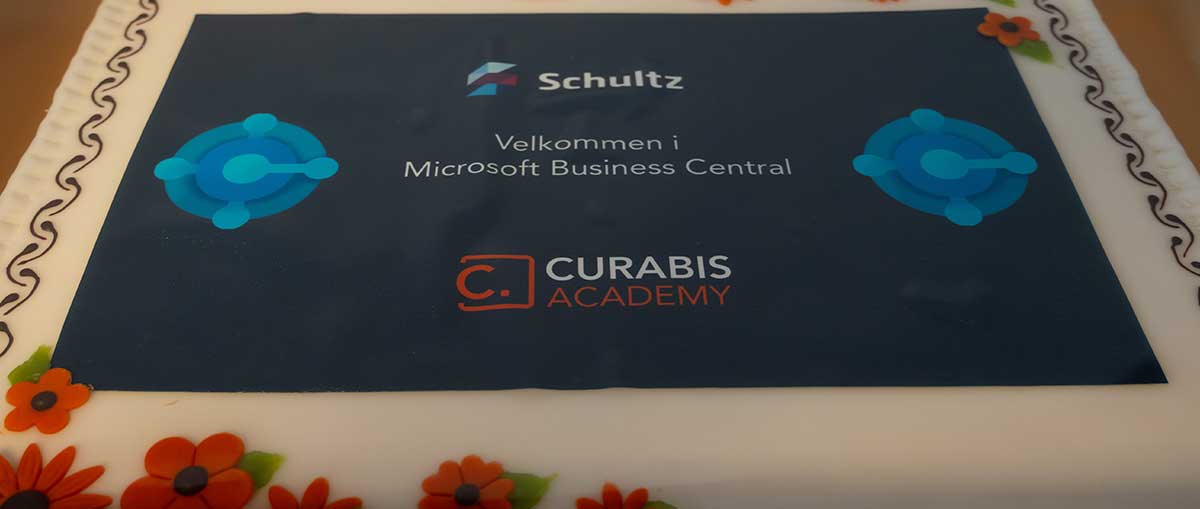
A good example is Schultz, where we completed a major technical upgrade of a complex system. The goal wasn't to start from scratch but to keep the strong foundation in place and open up new possibilities in Business Central at the same time. The result is a system where operations, stability and ongoing development go hand in hand.
Customer success story

Schultz-Reference.jpg

Read the full story

Schultz-Reference.jpg

Get clarity on your upgrade

The move from NAV to Business Central can vary significantly in complexity, depending on your system, customisations and workflows.

In about 3 minutes, you can answer a set of questions that give you a realistic picture of what your upgrade involves.

The questions are based on how businesses have typically used NAV over the years, and help identify where the complexity sits.

When you're done, you'll get a thorough assessment showing:

• where you are today

• which factors matter

• and what your natural next step could be

That gives you a solid basis for making the right decision, whichever path you choose.

Microsoft Dynamics 365 Business Central is the direct successor to Dynamics NAV (formerly Navision). Business Central is a cloud-based ERP system (SaaS) with two annual updates released by Microsoft, while NAV is on-premise and typically locked to the version the company originally implemented. Business Central uses the AL language and extensions instead of C/AL and object modifications, and the platform supports native integration with Microsoft 365, Power Platform, Copilot and open APIs. Microsoft has ended mainstream support for all NAV versions, which makes Business Central the only upgrade path within the Dynamics family.

A NAV to Business Central upgrade typically costs between 35,000 and 280,000 EUR depending on the number of users, the volume of customisations, integrations and data. The main cost components are licensing (Business Central Essentials at approximately 70 EUR per user per month, Premium at approximately 100 EUR per user per month), implementation consultants, data migration, code conversion from C/AL to AL and user training. CURABIS provides a fixed estimate after an initial assessment phase that maps the actual setup

A typical NAV to Business Central upgrade takes 3 to 9 months from project start to go-live. Simple upgrades without heavy customisations can be completed in 3 to 4 months, while complex installations with many integrations and legacy customisations can take 9 to 12 months. The timeline covers assessment (2 to 4 weeks), data migration and code conversion (4 to 12 weeks), testing and UAT (4 to 8 weeks) and go-live with hypercare (2 to 4 weeks).

All versions of Dynamics NAV can be upgraded to Business Central, including Navision Financials 2.x, Navision Attain 3.x, Microsoft Business Solutions Navision 4.x, Dynamics NAV 5.0, 2009, 2013, 2015, 2016, 2017 and 2018. Microsoft provides direct upgrade tools from NAV 2015 and later. Older versions typically require a step upgrade through an intermediate version or a re-implementation with data migration. CURABIS has delivered upgrades from every NAV version since Navision Financials.

The choice between a technical upgrade and a re-implementation depends on two factors: the volume of business-critical customisations and the organisation's readiness for process change. A technical upgrade preserves existing code, processes and data, and is faster and cheaper. A re-implementation builds on standard Business Central, reduces technical debt and exploits new functionality, but requires change management and user training. CURABIS uses two tracks, "Build on Existing Foundation" and "Rethink and Simplify", chosen after the assessment phase.

A NAV to Business Central upgrade migrates all transactions, master data, general ledger entries, customers, vendors, items and document history through Microsoft's standard data upgrade tools or RapidStart packages. Customisations written in C/AL are converted to AL extensions, which makes them cloud-compatible and aligned with future Microsoft updates. Integrations are moved to REST APIs, web services or Power Automate. CURABIS tests the migration on the full data volume before go-live.

Microsoft Dynamics 365 Business Central is a cloud-based ERP system from Microsoft aimed at small and medium businesses with 10 to 1,000 users. The system covers finance, sales, purchasing, inventory, manufacturing, projects, service and reporting, and integrates natively with Microsoft 365, Teams, Power BI, Power Automate and Copilot. Business Central is available as SaaS (cloud), on-premise and hybrid, and is updated by Microsoft twice a year with major releases in April and October. The product replaces Dynamics NAV and is Microsoft's strategic ERP platform for the SMB segment.

CURABIS ApS is a Danish Microsoft partner specialising in upgrades from Dynamics NAV and Navision to Dynamics 365 Business Central. The company is headquartered in Høje Tåstrup and delivers upgrades, data migration, process workshops in Q2C (Quote-to-Cash) and P2P (Procure-to-Pay), automated testing and Keep Current maintenance of Business Central. Reference cases include Schultz A/S. CURABIS offers a 3-minute complexity test as a first step in evaluating an upgrade.